Tintigny’s Local Mobility Plan
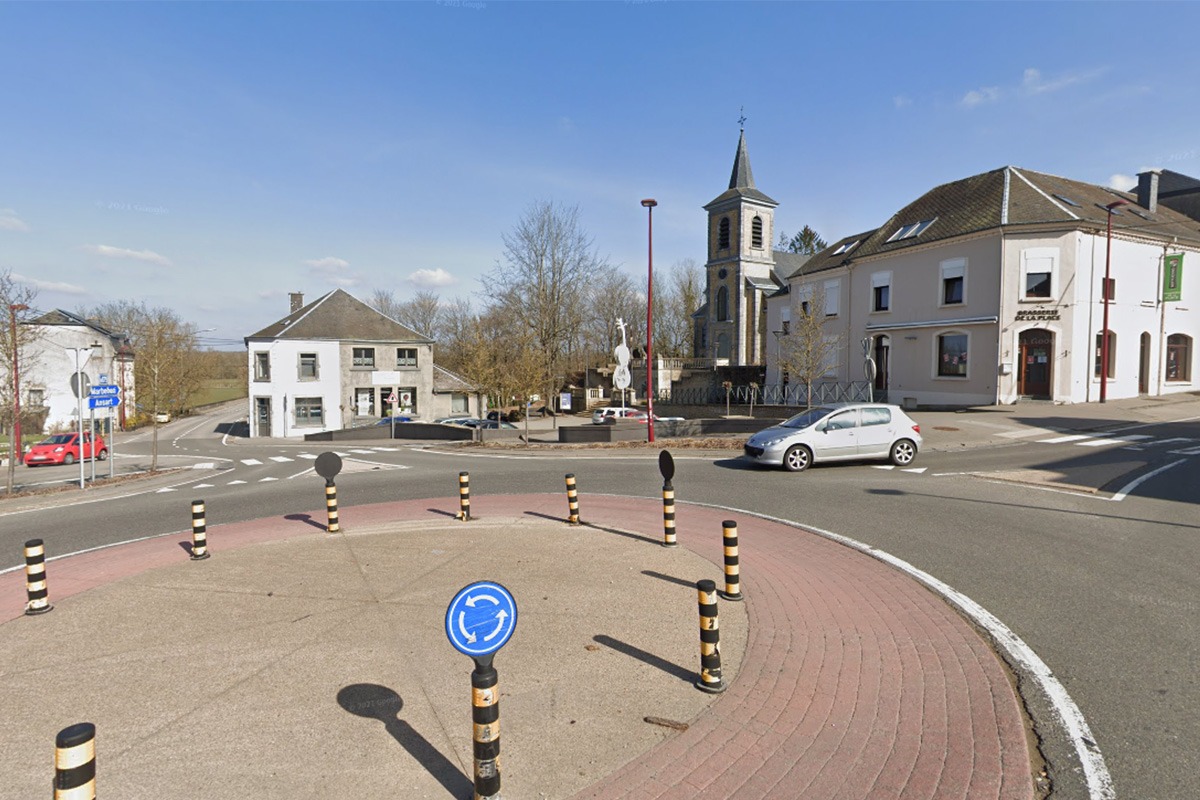
Source : Google 2021
Mission objectives
To draw up the PCM (Communal Mobility Plan) for Tintigny. The PCM is a strategic tool for planning sustainable mobility at local authority level. It aims to organise and manage travel, parking and access to residential and commercial areas.
The three priority measures identified during the diagnostic phase of this project are:
The three priority measures identified during the diagnostic phase of this project are:
- Strengthening and improving the safety of active travel: several factors limit walking and cycling, but safety is undoubtedly the key factor in the choice of transport mode for daily journeys.
- Improving safety and the coexistence of different modes of transport: village centres and areas around schools are typically places where different modes of transport must coexist and where the safety of all must be ensured.
- Improving the user-friendliness of public spaces: generally speaking, the amount of space allocated to motorised traffic and parking affects the safety of active transport and limits the space available for high-quality public spaces.
Achievements and impact
Key proposed measures:
- Improving pedestrian mobility and parking management in Tintigny: it is proposed to ensure pedestrian continuity between the various centres of interest by creating or renovating pavements and adding pedestrian crossings, and to tackle unauthorised parking, which significantly encroaches on pedestrian routes.
- Improving pedestrian mobility and parking management in Rossignol: two regional roads intersect in the heart of the village, creating a significant barrier for active transport users. It is proposed to reduce the footprint of the junction and make crossings safer. Furthermore, the parking strategy focused on the needs of the new museum adjacent to the cultural centre.
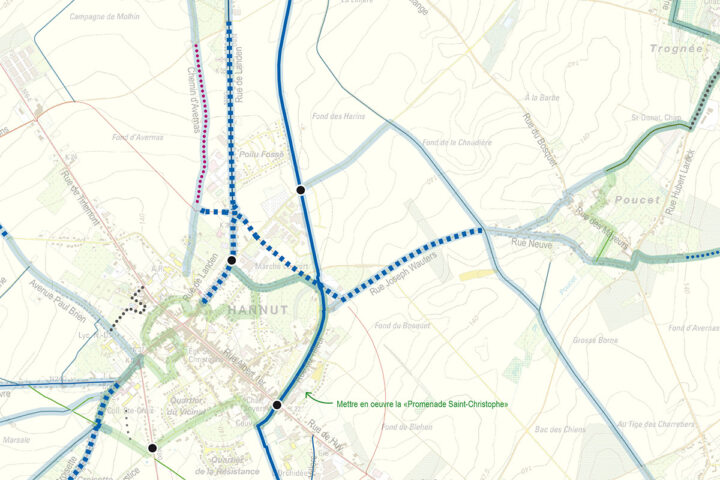
- Creation of a cycle network: existing infrastructure is fairly limited, but the area benefits from a network of farm and forest tracks which has been put to good use. However, some connections remain challenging, particularly due to the low density of roads (there is only one road between two villages). The municipality of Tintigny was able to draw on this detailed analysis to identify priorities within the framework of the ‘Wallonie Cyclable’ call for projects, which led to the development of several cycle routes.